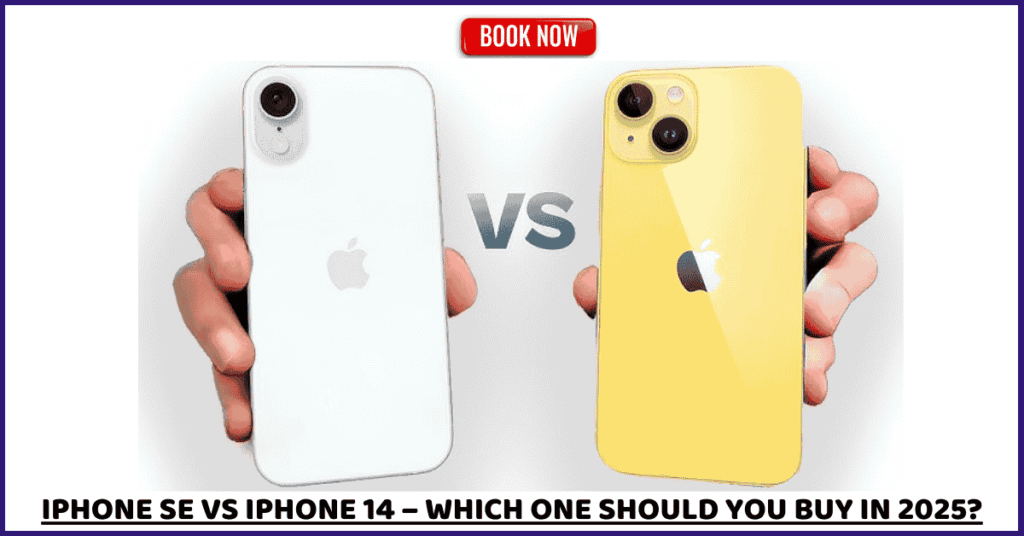
If you’ve been holding off on a new iPhone because you don’t want to splurge on the top‑end models, the Apple iPhone SE (2025) might be exactly the refresh you were waiting for. The SE line has always been Apple’s way of giving you the core iPhone experience without all the premium‑price extras — and 2025’s version promises to stick to that philosophy. In this post, I’ll walk you through how the phone feels in real life, what works well, where it compromises, and whether it’s worth it in 2025’s crowded smartphone market.
📦 What’s new with iPhone SE (2025) — Specs & upgrades
- The 2025 SE is widely expected to come with a 6.1‑inch OLED display, a big jump over the older SE’s 4.7‑inch LCD. Cashify+1
- Under the hood: Apple’s A18 Bionic chip (same generation as the iPhone 16), paired with 8 GB RAM — meaning snappy performance and good future‑proofing. Cashify+2mint+2
- Camera gets upgraded: a 48 MP rear camera (single‑lens) and a decent front camera for selfies/video calls. MacRumors+2The Times of India+2
- Design & usability: It drops the old “Home-button + Touch ID” and moves to a more modern iPhone layout with Face ID, notch (or equivalent), and USB‑C port. Forbes+2The Times of India+2
- Storage / battery / basics: Expected to have ample storage options and a battery comparable to previous SE/flagship models — good for everyday usage without frequent charging. Cashify+1
Related Posts:
In short: more screen, more power, better camera — but Apple seems to have aimed to keep it “just right” without overdoing the price.
🧪 Real‑World Performance — How It Feels Day to Day
Speed & everyday use
Because of the A18 chip and 8 GB RAM, the phone flies through everyday tasks. Apps launch fast, multitasking is smooth, and iOS runs without hiccups. Whether you’re browsing social media, replying to emails, streaming videos, or toggling between apps — everything feels responsive. For most users, it delivers flagship‑level fluidity at a mid‑range price. Even heavier tasks like photo editing or gaming feel surprisingly capable thanks to the processing boost.
Camera and media
The 48 MP rear camera produces sharp, vibrant photos. In daylight, colors pop and detail is plenty. Low‑light performance is decent — while not flagship‑level, it’s more than acceptable for social‑media photos or casual snapshots. For video calls, Instagram Stories or Reels, the front camera delivers clean results. The OLED screen also adds punch to photos, videos, and gaming, with deeper blacks and better contrast than older LCD SE models.
Design & daily comfort
The larger 6.1‑inch size makes the phone feel more modern and aligned with other current iPhones. It’s comfortable enough for one‑handed use (for most people), but you do notice the size bump compared to older SEs — which feels like a necessary trade‑off for screen real estate. The removal of the Home button and switch to Face ID / notch feels natural and more future‑proof. USB‑C is a welcome addition, especially if you already use other USB‑C devices (laptops, chargers) — reduces cable clutter.
Battery & longevity
Battery life is solid for day‑to‑day use: you can easily get a full day’s worth of email, calls, browsing, photos, and a bit of streaming. Performance seems steady even after multiple hours of heavy usage, which is impressive for an “SE‑class” iPhone. Given the updated internals, this model should age well over the next 3–4 years compared to older SE models.
✅ What Works — The Strengths
- Great performance-to-price ratio — flagship‑class performance without flagship‑class cost
- OLED display makes media, photos, and apps look significantly better than older SEs
- Camera system is solid for everyday use and social‑media content
- Updated design (Face ID, USB‑C, bigger screen) makes the phone feel current
- Good battery life and smooth multitasking for typical users
⚠️ What To Know — Tradeoffs & Where It’s Not Flagship
- Only a single rear camera — no ultra‑wide, no telephoto, i.e. less flexibility than full‑flagship iPhones
- Not all high‑end camera features (night mode edge cases, pro‑grade photography) — acceptable for normal shots but not “pro level”
- Mid‑range price relative to previous SE models — some of that budget‑phone charm is lost in favour of upgrades
- If you want top‑tier gaming, photography, or advanced camera capabilities — there are better (and pricier) options
🧑💻 Who This Phone Is For — Ideal Users
The 2025 SE is perfect if you:
- Want an iPhone that’s fast, smooth, and gets the core iOS experience without paying flagship premiums
- Use the phone mostly for everyday tasks — social media, messaging, photos, browsing, streaming
- Prefer a balance of price and performance — where camera and cutting‑edge features are nice but not deal‑breakers
- Value simplicity, reliability, and straightforward iPhone UX without needing pro‑level specs
It’s less ideal if you’re a power‑user who needs advanced photography, pro video, heavy gaming, or the absolute best camera performance.
🧩 Verdict: Worth it in 2025?
If you ask me: yes — the 2025 SE is a strong “sweet‑spot” iPhone. It packs enough modern hardware to feel current, delivers real everyday value, and sits at a more reasonable price point than flagship iPhones. For most people, it hits the balance beautifully: good screen, capable camera, smooth performance, and long‑term viability — without overpaying for features you might never use.
If you want a good, reliable, balanced iPhone right now, give this SE a serious look.
Final Thoughts
The 2025 SE isn’t about being flashy — it’s about being smart. It’s for people who want what matters: speed, simplicity, and reliability. And in 2025, Apple seems to have really refined that formula. If you decide to pick it up, I’d recommend using it for a few days, exploring the camera in different lighting, and seeing how the larger screen feels — it might just surprise you.